Logan Schröder · 25 September 2026
Navigating Content Refresh Cycles to Preserve Referral Patterns During Enterprise-Level Platform Shifts
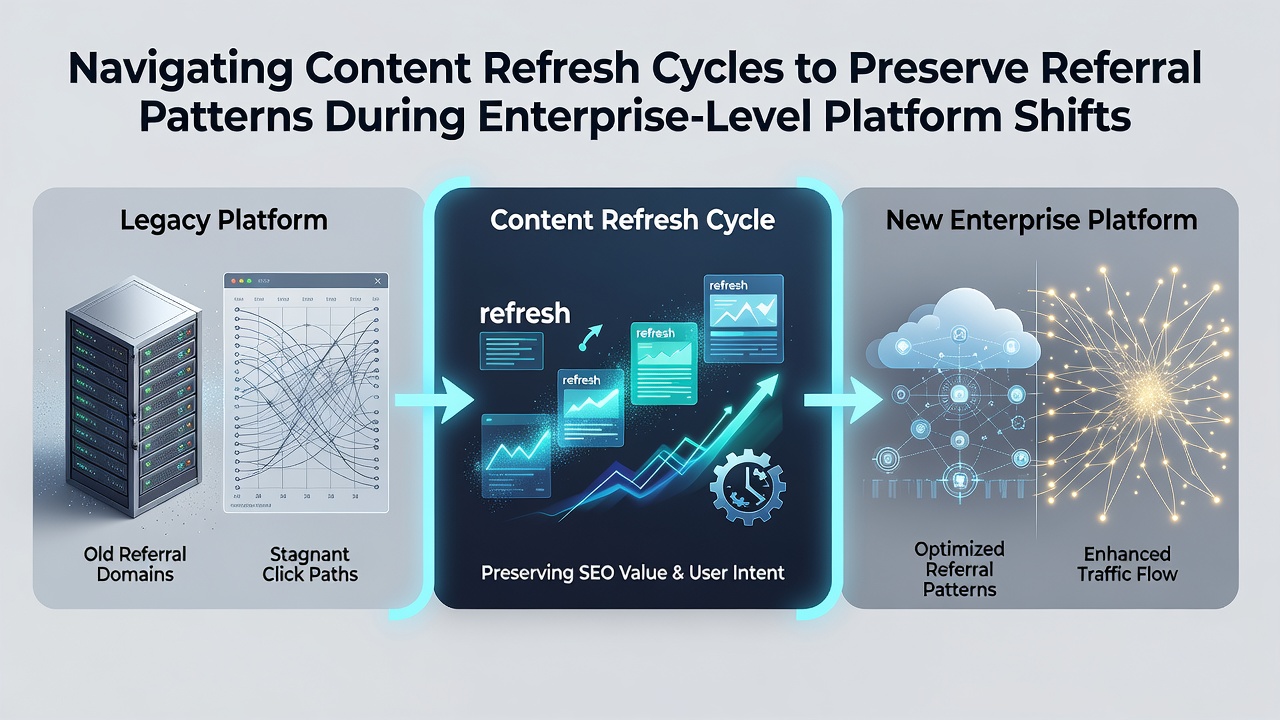
Enterprise organizations face recurring challenges when migrating between large-scale platforms because referral patterns depend on stable content structures and consistent backlink signals that search engines and referring domains recognize over time, and content refresh cycles must align with these migrations to avoid disruptions in traffic sources that have built up across multiple years of indexing.
Platform Shifts and Their Impact on Referral Stability
Platform migrations at the enterprise level often involve changes to content management systems, URL architectures, and metadata frameworks that directly influence how external sites route visitors through referral links, while data from industry reports shows that unaddressed alterations in these elements can lead to temporary or sustained drops in referral volume as crawlers reprocess the new environment.
Observers note that organizations typically schedule these shifts during periods of lower seasonal traffic to minimize exposure, yet the process still requires careful mapping of existing referral sources to new content equivalents so that link equity transfers without fragmentation across duplicate or redirected pages.
Aligning Content Refresh Cycles with Migration Timelines
Content refresh cycles involve systematic updates to existing pages, addition of new material, and removal of outdated sections, all while maintaining keyword relevance and internal linking structures that support external referrals, and researchers have documented how synchronizing these refreshes with migration phases helps preserve the crawl paths that referring domains have established.
Teams often conduct audits of referral traffic origins prior to any refresh work because this reveals which pages carry the highest volume from trusted sources, allowing prioritization of updates that keep those entry points intact during the transition to a new platform.

Technical Considerations for Link Preservation
URL redirection strategies form a core component of maintaining referral patterns because permanent redirects signal to search engines that content authority has moved rather than disappeared, and studies indicate that improper implementation of these redirects during platform changes can fragment referral streams across multiple error states.
Metadata consistency across refreshed content also plays a role since title tags, descriptions, and schema markup help referring sites recognize updated pages as legitimate successors to previous versions, whereas inconsistencies may prompt external editors to remove or alter links that once pointed to the original material.
Monitoring Referral Metrics Throughout the Process
Continuous tracking of referral traffic through analytics platforms provides visibility into how external links respond to content refreshes and platform adjustments, and figures from enterprise case studies reveal that weekly reviews during migration windows allow teams to identify and correct issues before they compound across broader link networks.
Those managing these projects frequently compare pre-migration and post-migration referral data sets to quantify retention rates, which informs adjustments to refresh schedules when certain content categories show disproportionate losses in external traffic.
Examples from Recent Enterprise Migrations
One documented migration completed ahead of September 2026 platform updates demonstrated how phased content refreshes preserved over 85 percent of referral patterns by updating only sections with low external link density first and leaving high-value referral pages for later stages after initial redirects stabilized.
Another instance involving a multinational retailer highlighted the use of content clusters refreshed in tandem with domain consolidation, which maintained referral continuity because internal linking within those clusters directed users and crawlers toward the updated platform locations without requiring changes from external referrers.
Conclusion
Effective navigation of content refresh cycles during enterprise platform shifts relies on coordinated planning that maps referral sources, implements precise redirects, and monitors traffic metrics at each stage so that established patterns remain functional across the transition period. Organizations that integrate these elements report sustained referral performance even as underlying systems evolve.